How Hotels Reduce Guest Complaints Through SOP-Based Cleaning
Five-star ratings are not won by individual brilliance. They are won by a documented system that performs identically on day 31 and day 312.
- Guest complaints concentrate in a small number of predictable, SOP-addressable categories.
- Standardised workflows transfer operational consistency from individuals to institutions.
- Quality assurance walks and inspection logs are the empirical backbone of a defensible cleaning programme.
- The cost of an SOP system is recovered within a quarter through complaint reduction alone.
Guest complaints are predictable — and therefore preventable
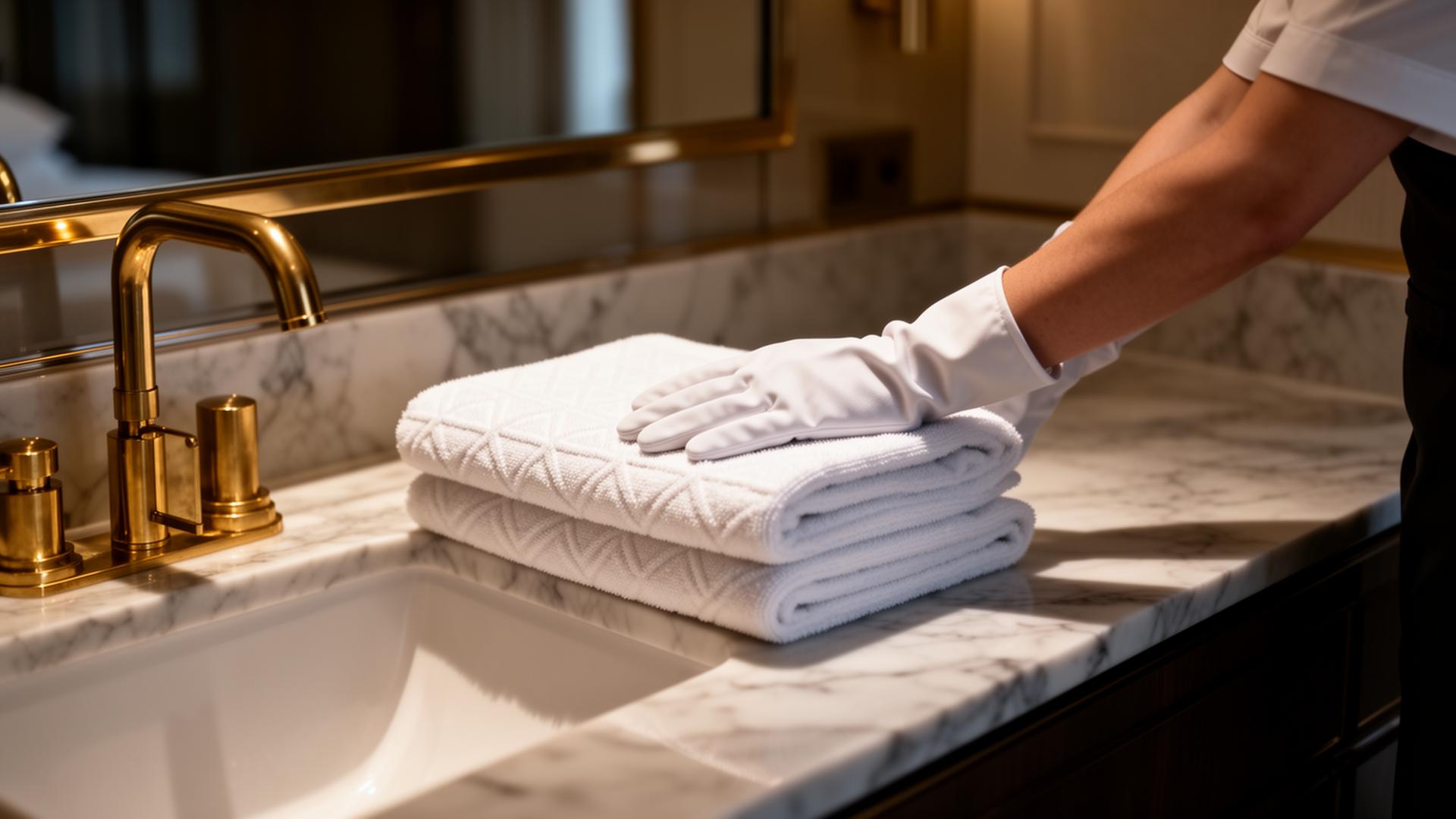
Most guest complaints in upscale hospitality concentrate in a narrow set of categories: bathroom hygiene, bedding presentation, AC odour, missing or insufficient amenities, and visible wear in high-touch zones. Each one is preventable with a documented protocol.
The strategic question is therefore not whether to introduce SOP-based cleaning, but whether the property can afford to operate without it.
What an SOP actually is in hospitality cleaning
A standard operating procedure is not a checklist on a clipboard. It is a sequenced, time-bounded, role-assigned, outcome-tested protocol with photographic or supervisor verification at completion. It defines:
- Sequence of cleaning by zone and surface type.
- Chemistry and dwell times appropriate to the substrate.
- Inspection points and what "pass" looks like.
- Escalation triggers — when a finding becomes a maintenance ticket.
- Sign-off and logging procedure.
From individual brilliance to institutional consistency
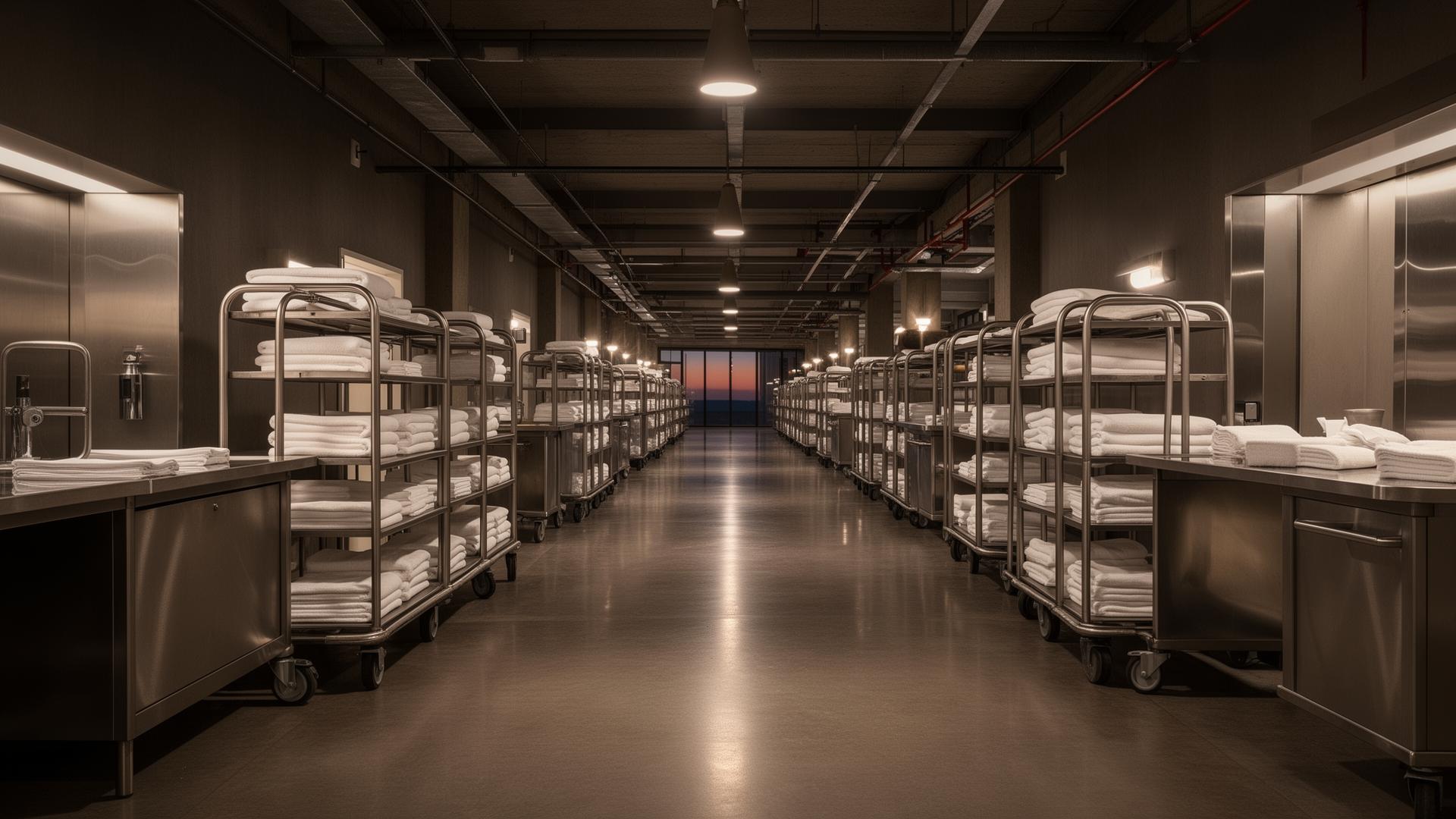
A talented housekeeper can deliver an exceptional room. An SOP makes every room exceptional, on every shift, regardless of who is on duty. The transfer of consistency from the individual to the institution is the central operational shift that separates managed hospitality from unmanaged hospitality.
This is also why managed cleaning programmes are recoverable assets: they survive turnover, training cycles and seasonality.
QA walks: the empirical backbone
Daily completion logs and weekly QA walks form the empirical foundation of any defensible cleaning programme. Without them, an operator cannot demonstrate compliance to owners, brands, insurers or regulators — and cannot improve anything systematically.
Every premium property we operate runs on a measurable inspection cadence. That is not optional infrastructure; it is the infrastructure.
Frequently asked
How long does it take to implement SOP-based cleaning at a hotel?
Document and train in 4–6 weeks; full operational embedding typically requires 90 days of supervised execution and feedback.
Do SOPs reduce labour cost?
They reduce rework and complaint-recovery cost, which is typically larger than any reduction in direct labour. Properly designed SOPs also enable accurate labour scheduling.
Can SOPs survive staff turnover?
Yes — that is their central operational advantage. A documented SOP is transferable across staff in days, whereas tribal knowledge takes months to rebuild.
References & further reading
- 01American Hotel & Lodging Association (AHLA)Lodging Industry Reports & Standards
- 02U.S. Centers for Disease Control and Prevention (CDC)Environmental Cleaning & Disinfection Guidance
- 03Hospitality NetIndustry Briefings on Hotel Operations
- 04Hotels MagazineHotel Operations Research & Commentary
Reader Commentary
Be the first to contribute to the conversation.