The Operational Infrastructure Behind Luxury Hospitality
The guest sees a candle, a folded towel, a perfectly tempered room. Behind it sits an operational machine that very few guests — and surprisingly few owners — ever see.
- Luxury guest experience is an output of integrated back-of-house operations, not a quality of frontline talent.
- Staffing, laundry, cleaning, logistics and QA are best operated as a single system, not as procurement categories.
- Coordination failure — not capability failure — is the most common root cause of guest dissatisfaction.
- Integrated operational partners materially outperform fragmented vendor stacks at the same total cost.
What the guest sees, and what the guest does not
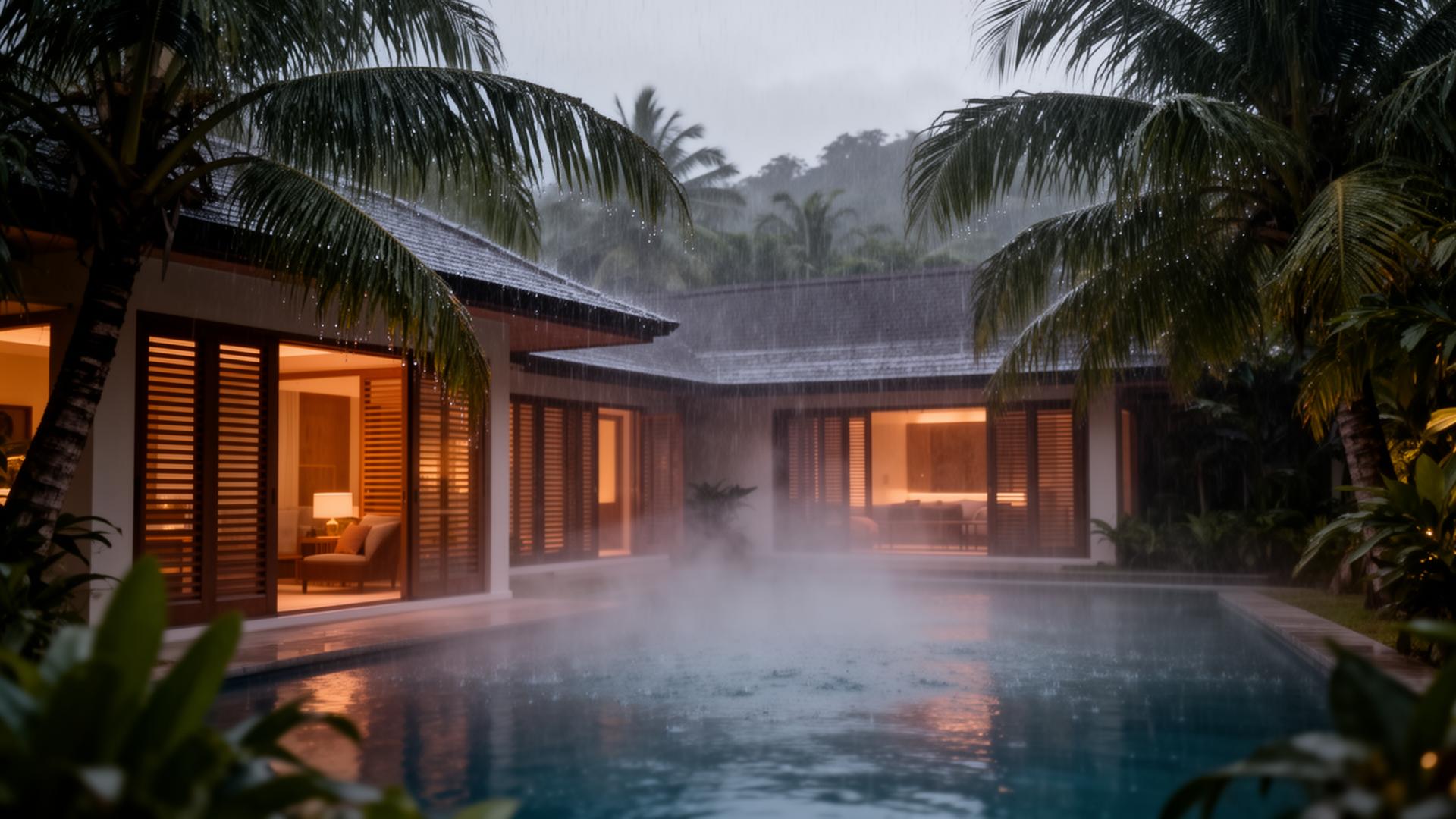
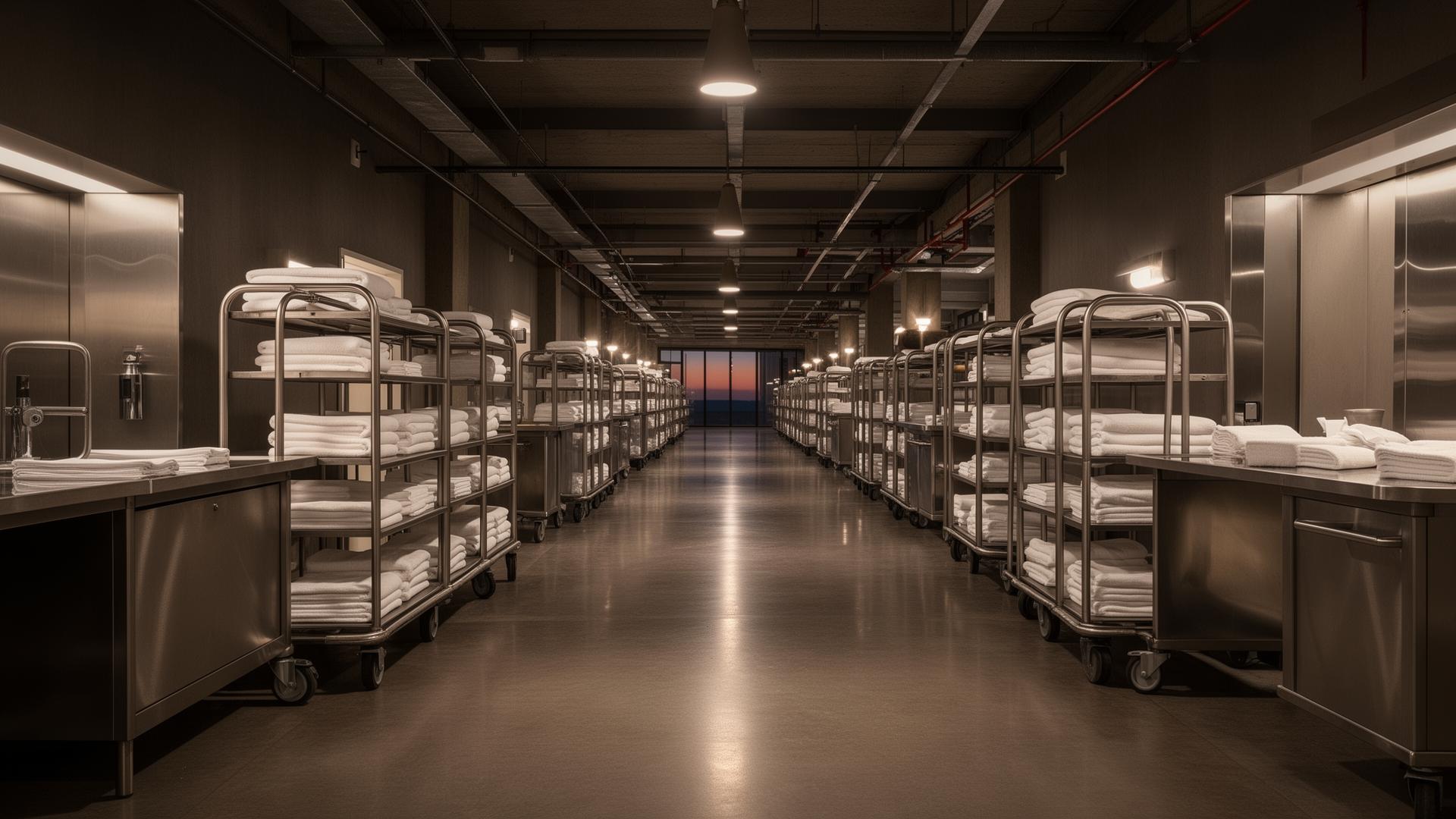
The guest sees a candle on the terrace at sunset, a folded towel placed with geometric precision, a perfectly tempered room. They do not see the trolley logistics, the linen reconciliation, the AC cleaning cadence, the supervisor walk that caught a slow drain at 06:42.
Luxury hospitality is the visible output of an invisible operational machine. Properties that excel have invested in that machine. Properties that struggle have not.
Five systems, one machine
An integrated hospitality operations capability runs five inter-dependent systems:
- 01Staffing — vetted, trained, SOP-aligned, supervised on cadence.
- 02Laundry — par-stock controlled, validated chemistry, traceable rotation.
- 03Cleaning — protocolised, inspected, photographically signed off.
- 04Logistics — predictable pickup and delivery, consolidated dispatch.
- 05QA & reporting — measurable, audit-ready, owner-visible.
Coordination — not capability — is the most common failure
Each of these five systems can be procured separately. Most operators do. The result is a stack of capable vendors who do not share a reporting layer, a scheduling layer or accountability for the guest outcome. When something fails, no one owns it.
Sophisticated operators consolidate the stack. Not for cost, but for accountability — and the cost typically improves as a second-order effect.
The institutional difference
Properties operated against a single integrated operational system tend to share a recognisable institutional posture: documented standards, calm escalation, predictable performance during peak season, and operational data the owner can actually use.
This is the operational foundation of every credible luxury hospitality brand in the world. It is not a feature. It is the floor.
Phuket — why this matters here, now
Phuket's hospitality market has matured rapidly. Guests benchmark against the global luxury frontier, and they discount properties that operate informally. The window for ad-hoc operations as a viable model has closed for any property positioning above mid-market.
The operators that recognise this early — and build, partner or migrate to integrated operational infrastructure — will define the next decade of Phuket hospitality.
Frequently asked
How does an integrated operational partner reduce cost?
By consolidating staffing, laundry, cleaning, logistics and QA under a single coordination layer, operators eliminate vendor overhead, idle time and rework — the largest hidden cost categories in fragmented stacks.
What size of property benefits from integrated operations?
Any revenue-generating hospitality asset above 5–8 keys, and any multi-property portfolio regardless of size.
Can integrated operations be added gradually?
Yes. Most engagements begin with one operational area (commonly laundry or turnover) and expand as the institutional layer demonstrates measurable value.
References & further reading
- 01American Hotel & Lodging Association (AHLA)Lodging Industry Reports & Standards
- 02Hospitality NetIndustry Briefings on Hotel Operations
- 03Hotels MagazineHotel Operations Research & Commentary
- 04Textile Rental Services AssociationTRSA Hygienically Clean Standards for Hospitality Textiles
- 05Tourism Authority of ThailandTourism Statistics for Phuket & Thailand
Reader Commentary
Be the first to contribute to the conversation.