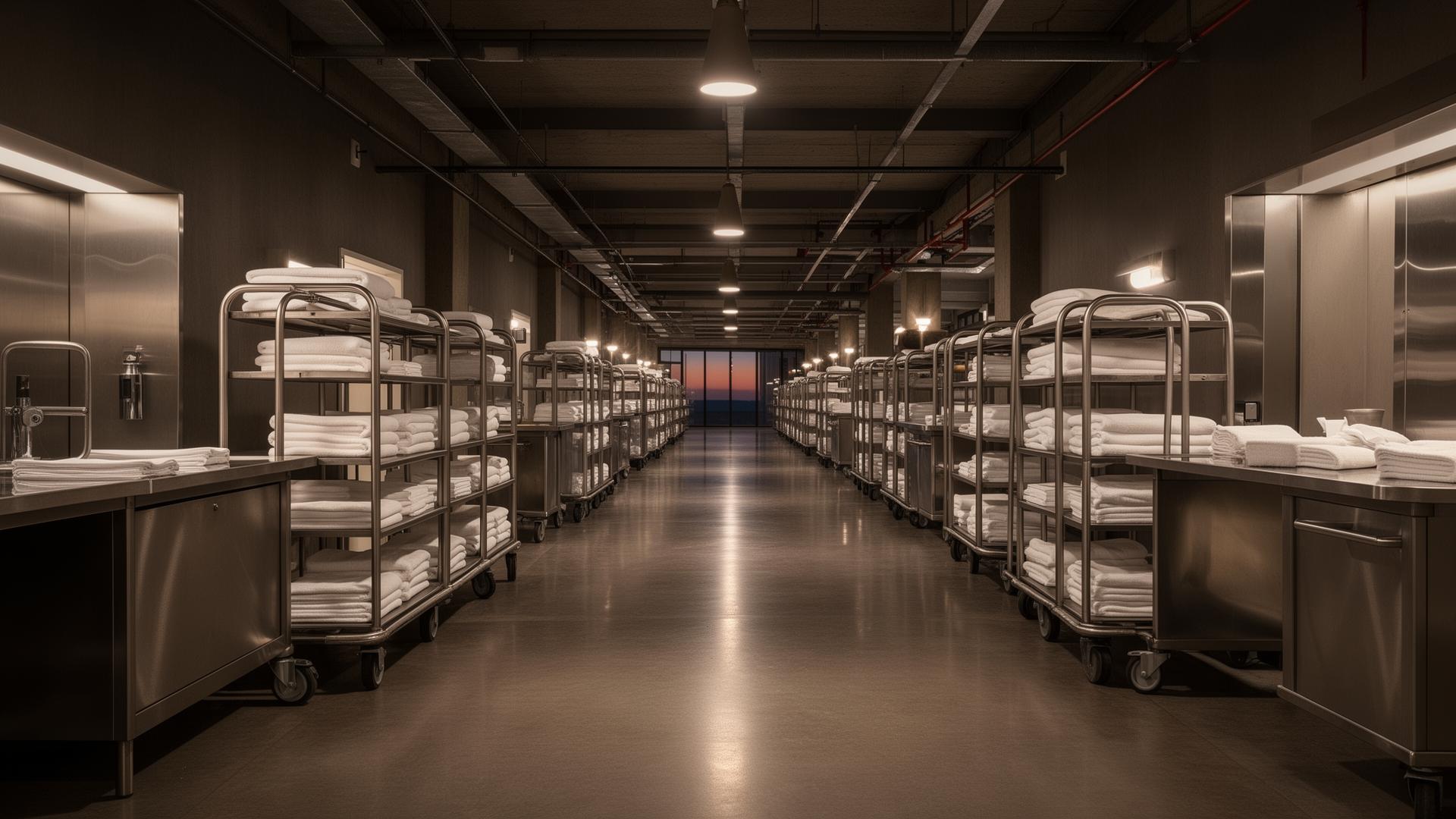

Operational Standards for High-End Airbnb Turnovers
Luxury short-stay performance is decided in the 90 minutes between a 11:00 checkout and a 15:00 check-in. Most operators lose those 90 minutes.
- The premium-stay guest experience is decided in a tightly compressed turnover window, not at check-in.
- Inspection, inventory verification and photographic sign-off are non-negotiable for properties above USD 500/night.
- Maintenance reporting during turnover is the single highest-leverage signal an operator can capture.
- Multi-villa portfolios require centralised scheduling, not site-by-site coordination.
The 90-minute window
Premium short-stay hospitality is decided in the narrow window between one guest's checkout and the next guest's arrival. In Phuket, that window is typically 11:00 to 15:00. Within it, the property must be cleaned, restocked, inspected, photographed and signed off.
Properties that win five-star reviews treat this window as a structured operational event with assigned roles, time-stamped checkpoints and a final inspection gate. Properties that lose reviews treat it as a cleaning task.
What a premium turnover protocol looks like
A defensible turnover for a USD 500+/night villa runs across five sequenced phases:
- 01Checkout coordination — verified time, damage walk, lost-and-found capture.
- 02Cleaning + linen exchange — every soft surface refreshed; bathroom protocols completed against checklist.
- 03Restocking — consumables, welcome amenities, kitchen pars; verified against inventory list.
- 04Inspection — supervisor walk; photographic capture of bed, bath, kitchen, terrace, pool.
- 05Sign-off — final readiness confirmation logged to a shared system before check-in window opens.
Maintenance reporting is the highest-leverage signal
Turnover is the only moment when the property is empty, lit, and being walked end-to-end by a trained operator. It is therefore the single best window to catch failing AC units, slow drains, mould pressure, pool chemistry drift, and wear on premium finishes — before guests do.
Operators that capture this data structurally compound an enormous operational advantage over those who do not. The cost of capturing it is zero; the cost of not capturing it is paid in review scores and emergency repairs.
Portfolio operators cannot coordinate site-by-site
Once an operator manages more than three properties, the turnover model must shift from local coordination to centralised dispatch. Travel time, linen logistics and inspection coverage break down without a shared scheduling layer and a standardised SOP.
This is the operational threshold at which most boutique operators stall — and the point at which a unified operations partner becomes a margin-defining investment, not a discretionary one.
Frequently asked
What turnover time is realistic for a luxury 3-bedroom villa?
A trained two-to-three person team can complete a full premium turnover (clean, linen, restock, inspect, sign-off) in 2.5 to 4 hours depending on guest-side condition and amenity complexity.
Should turnover cleaning be the same crew as long-term housekeeping?
Not always. Turnover requires a different operational tempo and inspection discipline. Many premium operators use a dedicated turnover team supported by long-term housekeepers.
Is photographic sign-off necessary for high-end Airbnb?
For any property above USD 500/night, yes. It protects the operator, the host, and the cleaner — and it is the foundation of trustworthy multi-property management.
References & further reading
- 01
- 02American Hotel & Lodging Association (AHLA)Lodging Industry Reports & Standards
- 03Hotels MagazineHotel Operations Research & Commentary
- 04U.S. Centers for Disease Control and Prevention (CDC)Environmental Cleaning & Disinfection Guidance
Reader Commentary
Be the first to contribute to the conversation.